Carly
Carly
Introduction — The Evolution of Vocal Training in the Age of the Internet
Flash back a few years, and voice training was nothing but private lessons with a teacher, where live listening and voice analysis were the central development tool. As a result of the faster pace of technological advancements today, lesson limits blur quite a lot. Sound meters, audio track analysis programs, mobile phone applications — literally altering the mode of working on the voice, all these are. In this shift, voice training; pitch correction; vocal analysis; technique refinement; singing feedback become everyday foundations, powered by microphone input, real-time pitch tracking, and feedback metrics — this is our recommendation for the best music learning app approach.
What does this transformation mean? It makes lessons more open, interactive, and personal. Moving from the type of “complex” and “always needing watching” to the type where accuracy, instant feedback, and adaptation to each student’s unique features are important, vocal cord exercise is. New opportunities come for those who seek perfection in voice command through digital technologies, ensuring an ongoing process of development without spatial and temporal limitations. (Adds breath control, tone refinement, and vocal health awareness.)
What Talented And Such Apps Are — Revolutionary Vocal Skill Improving Tools
A mere app, but our engineers are building an intricate musical learning ecosystem with a focus on vocal ability learning and mastering. Some of the characteristic features built into apps like ours include:
- Pitch analysis — precise live sound height measurement, allowing one to see how well the singer hits the notes (real-time pitch and pitch accuracy).
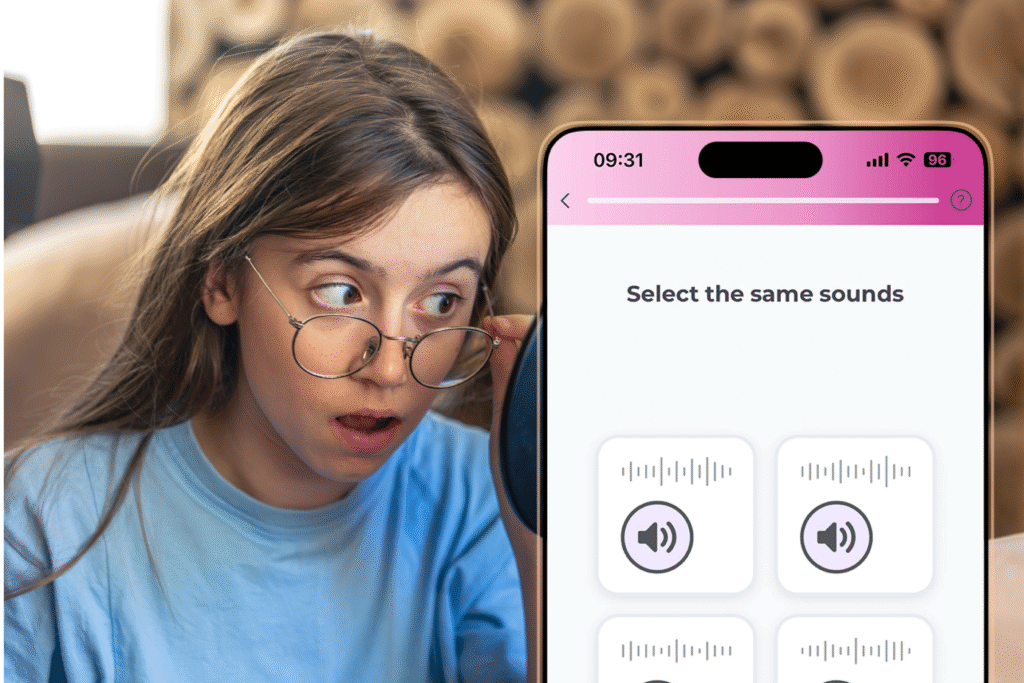
- Suggested feedback — a system giving particular suggestions depending on detected pitch and technique errors (singing feedback and technique coaching).
- Interactive exercises — different practices through which the user may build breathing, range, and vocal cord control (singing exercises, vocal range, vocal drills).
- Individual study plan — assignments and pace according to the user’s level and goals (performance analysis and confidence building).
For better clarity, below is a comparison table of traditional teaching methods and modern digital programs:
| Learning Aspect | Traditional Methods | Digital Platforms |
| Feedback | Subjective, from the teacher | Objective, instantaneous |
| Accessibility | Time and place bound | Anywhere and anytime |
| Personalization | At the mercy of the instructor’s whim | Variable, automated |
| Involvement | Open communication | Game-based interactive platforms |
Thus, new technologies don’t just enhance the traditional process — they transform it, and vocal training is made more accurate, enjoyable, and accessible. (Supports vocal analysis and technique refinement.)
Technologies Allow Tracing And Editing Vocal Tuning
Making control tools simpler and intonation easier, modern digital technologies render it more convenient and precise. Some of the most important advantages of using the technologies for tracing voice pitch include the following:
- Automatic sound analysis. Computer software like Talented analyzes each note’s pitch in real time in comparison to a standard, allowing the singer to see deviations in real time.
- Data visualization. Challenging processing of problematic notes is facilitated by visualizations through spectrograms, pitch charts, and points of departure (timbre analysis, tone consistency).
- Reference sound comparison. Provision for listening to a reference and singing along is included to help develop good ear and sensitization to exactly where the sound diverges from being in tune.
- History and development. Training sessions are recorded, making it possible to analyze the dynamics of improvement and identify repeating mistakes.
Thus, technologies open up a new area of self-correction, where the singer does not sing in the dark but with the assistance of objective information. Offering the development of vocal attention, it allows one to “hear oneself” in a different way and correct on time, enhancing the performance quality without constant control from the teacher. (Enables pitch correction and singing feedback.)
Technique Development Through Interactive Training And Real-Time Feedback
Real-time feedback is a core element of technical solutions, significantly enhancing the learning process of singing technique. Taking into account the unpredictability of the vocal instrument, the following elements are included in the interactive training:
- Step-by-step breathing and articulation training. All the elements of sound production are assisted by technologies, providing the fixation of the correct skills (breath control and tone refinement).
- Rhythmic and melodic exercises. Note and rhythm sequences generated by programs are attempted to be duplicated by the user, with immediate feedback on the accuracy of the performance.
- Intensity and dynamic modulation. Exercises provide a space to practice levels of loudness and sound, which are recorded and acted upon by the software (feedback metrics).
- “Sing along with the teacher” game. Embedded audio recordings and synchronized singing capabilities provide live lesson demonstration, encouragement, and involvement.
Feedback is the most essential aspect of successful development. Freedom from guessing and minimization of stress levels, it enables technique improvement focus and preservation of vocal apparatus health. Adjustability to the individual peculiarities of the performer, modern systems provide training as effective and simple as possible. (Reinforces technique refinement and voice training.)
Personalization Of The Learning Process — Adapting To Individual Abilities And Goals
Through careful personalization of lessons, new voice platforms such as Talented entirely revolutionize the method of approaching voice training. Rather than general programs for an average student, in here each receives a study plan tailored to his or her individual level, timbre properties, and goals.
Is why significant? Because the voice is a personal instrument, without pre-installed defaults. Faster results today are enabled by the sophisticated personalization tools:
- Real-Time Voice Analysis. The software corrects in real time as it calculates intonation accuracy, dynamics, and volume power (microphone input, feedback metrics).
- Adjustable Exercise. Others are provided by the software on weak points (for example, breath control or range extension) — targeted technique coaching.
- Progress Monitoring. From initial practice and benchmark tests as a starting point, incremental progress is accumulated by the platform, evolving in response to shifting skill sets.
- Prioritization Option. Student or teacher priority can be given to whatever is most pressing at the time — acting expressiveness, intonation clarity, or breathing technique.
Not dull and monotonous is the process of learning. It is transmogrified into a living system, one shaped to fit a particular singer, respecting his own pace and immediate goals. (Adds vocal analysis and performance analysis.)
Advantages Of Online Singing Lessons And Apps Over Conventional Tutoring
There are certain obvious advantages, making the former not only more convenient but in the majority of cases a considerably better choice in many ways, as apparent upon comparison of online singing training with normal lessons from a tutor.
- 24/7 Availability. Practicing at whatever convenient time is available without having to depend on the availability or scheduling of the tutor — effort and commuting time saved.
- Unlimited Selection of Material. Multi-level course, varied approach, and testing out techniques, not so readily available with one teacher, is provided by online materials.
- Real-time Feedback and Interactivity. Real-time recommendations for mistakes are provided by modern apps, without delay until the next lesson (singing feedback and pitch correction).
- Cost Savings. Often, membership or courses are cheaper than single lessons at regular prices without compromise on teaching quality.
- Self-Paced Learning. The when and how much to practice are left up to each, especially appropriate for busy individuals or tightly scheduled students.
For all the writing about learning, though, technology is not necessarily going to substitute a living mentor with personal experience and emotional support. But a maximally effective tool to the end of reaching vocal mastery is brought about by the intersection of online tools and good old tutoring. (Supports confidence building and vocal health habits.)
Limitations And Challenges Of Applying Technologies To Vocal Development
More involved in the real world than theoretically ideal digital facilities for vocals, things always are. Being developers of new software, we know it: a good helping technologies are, but not magic wand which could do everything. Let us speak about some principal limitations and challenges that users and we ourselves face when creating such services.
- Inadequate live contact and emotional response. Technical correctness, however, voice control is also expressiveness, sincerity, and creativity.
- Individual vocal and health attributes. Every voice is distinct; machines cannot fully infer vocal health or fatigue without human oversight.
- Limited feedback. Apps may overlook psychological state and nuanced breath control details.
- Quality of equipment dependency. Smartphone microphones, echo, and noise can reduce analysis accuracy.
- Motivation and self-discipline. Autonomy is required; without consistency, progress slows.
Short and sweet, the truth is remarkable: technologies do build potential and voice training can be brought to life, but entirely replacing an experienced teacher and in-person interaction they cannot. Best development is found by combining digital tools and human expertise. (Balance vocal analysis with human technique coaching.)
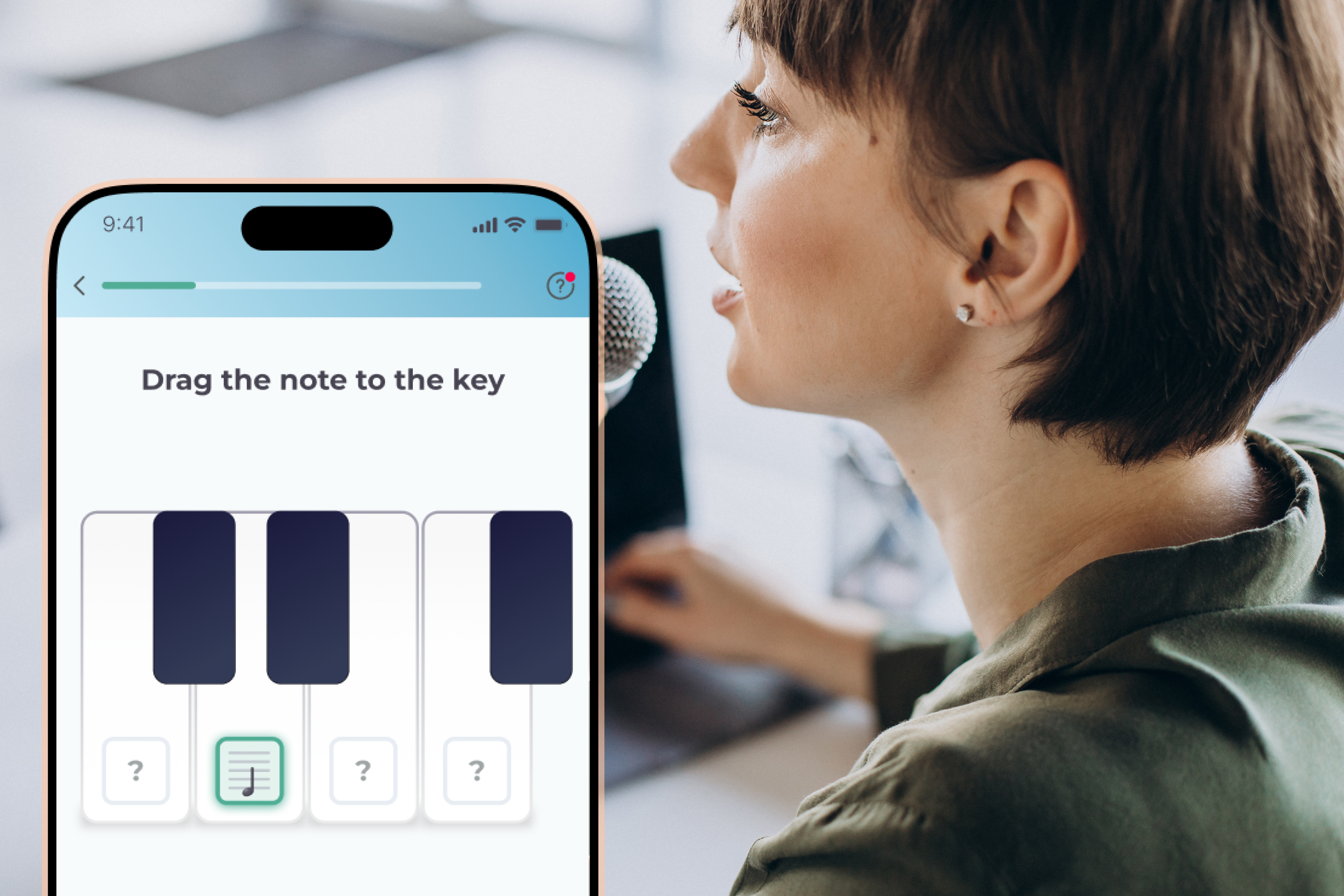
Practical Tips — How To Use Digital Tools Successfully In Home Practice
To make classes not only function but also motivate, there needs to be a thoughtful approach when employing technology in voice training. Following are some tips that will make digital tools your best friend, so to speak:
- Establish clear practice goals. Decide if you’re targeting tone refinement, breathing, dynamics, or rhythm to select the most apt exercises.
- Brief and frequent sessions. 15–30 minutes, 4–5 days a week supports retention and vocal health.
- Utilize the feedback facility. Correct mistakes on the fly with singing feedback and feedback metrics.
- Hybrid methodology. Mix online tools with teacher-led technique refinement and device-free practice.
- Keep a progress journal. Track mood, results, and issues to adjust your plan.
- Create relaxed practice conditions. Quiet space and good lighting improve focus and microphone input quality.
The Future Of Vocal Mastery — The Synergy Of Humans And Technologies
Irresistible as it may be, to plunge into the promise of vocal training advancement, that the future is a mixture of human innovation and technical innovation. Indicating the direction, the following are:
- Artificial Intelligence and Personalization. Greater adaptability and predictive coaching for technique refinement.
- Virtual and Augmented Reality. Immersive rehearsal spaces for stage practice and confidence building.
- Hybrid Learning Formats. Online platforms blended with live masterclasses.
- Advanced Sensors and Wearable Devices. Continuous data on breath control, vocal range, and tone consistency.
- Community and Collaborations. Motivating networks that sustain practice momentum.
Thus, before us stands an era when technologies will not surpass human imagination but be its powerful catalyst. Vocal 2.0 is not only about the voice boost but about providing additional channels for personal expression and new heights of creativity. (Continues integrating pitch correction, vocal drills, and performance analysis.)